Showing posts with label strength training. Show all posts

Monday, July 7, 2014

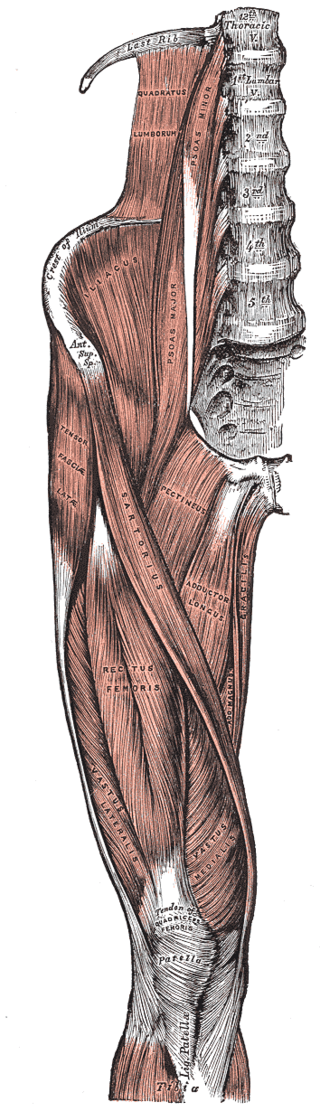
Build Strong, Powerful Legs!


If you're a martial artist or combat athlete you already know that the vast majority of your power comes from your legs and your hips. So, if your interested in being able to deliver more power in all of your moves (strikes, kicks, throws, etc...), then you need to put some serious effort into training your legs.

Now, I know a lot you guys out there think they may need a lot of equipment to properly work their legs: a squat rack, an Olympic Barbell, a Leg Press Machine, a leg extension machine, a leg curl machine, etc....

Well, I'm here to tell you that simply isn't true. You can build a pair of super powerful legs with just two exercises that require minimal equipment: the Pistol and the Swing.

Monday, June 30, 2014

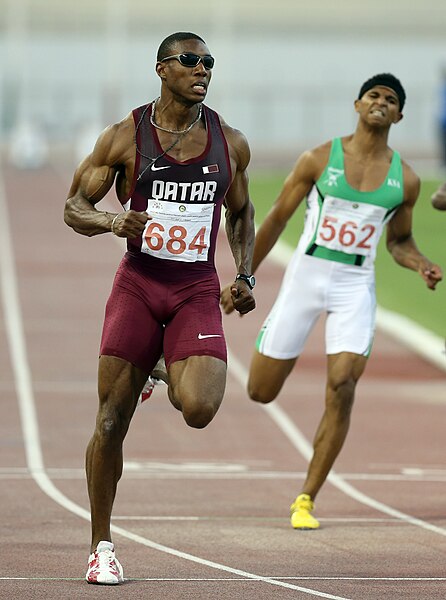
Sprint Training for Fighters!

Photo courtesy of Vinod Divakaran 
What is the one attribute a fighter a fighter should build before anything else?

Strong, powerful legs.

To build a proper foundation as a fighter you absolutely need to build your leg strength. There are a lot of great ways to build leg strength and power: Squats, Deadlifts, Pistols, Bulgarian Split Squat, Power Cleans, and Swings are all great examples. But one of my personal favorites is Sprints.

Friday, January 13, 2012

The #1 Thing You MUST Do If You Want To Be A Better Fighter

As MMA becomes increasingly popular, more and more people are becoming interested in the martial arts.

Not surprisingly, these individuals want to train like their favorite UFC hero. They see videos on YouTube of guys like Georges St. Pierre or Sean Sherk training like freaking mad men and want to emulate them.

 I mean, it isn't hard to understand why anyone wouldn't want to perform and train like any of the Pro MMA athletes.

The problem is: I don't think many of these guys really understand how high-level MMA fighters actually train - when the cameras and/or media aren't watching them.

Monday, October 24, 2011

How to Use Kettlebells to Excel as A Fighter

Tommy Blom kicking ass!
Here's an excellent Q&A article with Tommy Blom from DragonDoor.com:

"Tommy Blom: My basic fight training is with a professional team here in Göteborg. There we do all the actual MMA training, working in the cage, fighting and sparring. The technical stuff for the fighting. My physical training has been with myself basically, with kettlebells and heavy bags. That's about it...

...most of my MMA fight training when it's specified for that I usually divide it into rounds. So if I'm fighting three five-minute rounds, I'll just put the training into three five-minute rounds with one-minute rests in between...

...[t]he work in the rounds is a mix of basic kettlebell exercises like heavy swings, clean and jerk, long cycles, snatches, alternating with heavy bag work standing up or heavy bag work on the ground. It's about 30 seconds of heavy bag work and 30 seconds of swings, then 30 seconds of bag work on the ground. Then 30 seconds of clean and jerks. Double kettlebells and so on until the rounds are done..."

I enjoyed it, hope you guys do too.

Read the full article here!


Train Hard,
Josh Skinner


Men's Kettlebell Quick Start Kit

Saturday, November 27, 2010

Building Elite Levels of Strength and Power with No Equipment

In an ideal world we would have all the equipment and training space needed to execute a complete strength training program.


The problem is we don’t live in an ideal world. More often than not we have to do without ideal training equipment and ideal training facilities.

For some it’s a lack of funds. For others it’s a lack of availability.

Whatever the reason, have you ever considered that it's possible to build an incredibly powerful body with absolutely no training equipment?

The truth is: you can.

Thursday, November 4, 2010

4 Barbell Drills Every Martial Artist and Fighter Needs!

I’ve already been over why it’s so important for you as a martial artist to take up a proper strength training routine. So, today I just want to talk about a simple but HIGHLY effective routine for building both max strength and explosive strength...Oh, and you’ll only need one piece of equipment – an Olympic Barbell.

Why the Olympic Barbell? Because they're relatively cheap, versatile, and will last a lifetime.


Monday, October 25, 2010

How To Develop Bone Crushing Strikes!

A Practical Guide to Iron Hand for the Modern Martial Artist and Combat Athlete.

(this article is a re-write of another piece I did a while back. I feel this current work is a better starting point)

Developing the ability to deliver powerful strikes is essential in the martial arts. Even if you have a high level of skill and conditioning you won’t get very far in a fight if you don’t have the stopping power needed to take your opponent down.

Wednesday, September 16, 2009

The Unilateral Complex – Elite Conditioning Tool.

The idea of training with complexes has been receiving quite a bit of attention recently and with good reason. Complexes are an amazingly effective tool for losing fat and strengthening the heart, making them a great replacement for more common forms of cardio. Complexes also help to maintain muscle mass and increase levels of growth hormone and testosterone (something traditional forms of cardio – like jogging or working the elliptical – simply don’t do). When compared to other forms of general conditioning methods, complexes are tough. Doing a workout of complexes WILL humble you if you do it at the right intensity. This makes them a perfect training tool for the martial artist. However, to make things a bit more specific to martial arts I like to do what are called “unilateral complexes”.

Unilateral Complexes

In order to understand what a unilateral complex is you must first understand what a typical complex is. A complex is simply a series of exercises, done in succession, with one training tool (a barbell, dumbbells, kettlebells, rubber tubing, ect…). You complete a prescribed number of reps for an exercise before moving on to the next exercise. You are not allowed to put down the training tool between exercises. Once you have completed each exercise in the complex you are allowed to rest. Typical rest periods vary between 30 seconds to 2 minutes (depending on the intensity of the load being used).
Most complexes are done bilaterally (using both sides of the body simultaneously) with exercises like the barbell deadlift, the standing barbell should press, or the barbell power clean. Doing complexes according to this protocol is extremely effective, but it doesn’t offer a lot of specificity for the martial artist. Ask yourself : How many times have you thrown your punches or kicks with both arms or legs at the same time? Exactly. Unilateral complexes are done with either a single dumbbell or kettlebell (usually) working one side of the body at a time. You’ll complete all the exercises on one side of the body first, then switch sides and finish the complex on the other side of your body. Remember: you are only allowed to rest when you have completed each exercise in the complex on both sides of your body.
The following are my two favorite unilateral complexes. You can do them with either a single dumbbell or kettlebell:

Complex A: (click here for the video)
1. 1 arm Sumo Deadlift
2. 1 arm Row
3. 1 arm Clean
4. 1 arm Shoulder Press
5. Windmill
6. 1 arm Overhead Squat

Complete 3-5 repetitions for each exercise before moving onto the next. Choose a weight that allows you to complete the prescribed number of repetitions , with good form, for your weakest lift. Once you’ve completed the complex you can rest 30 seconds to 2 minutes. Try to complete 3-8 complexes

Complex B: (click here for the video)
1. Split Style Suitcase Squat
2. Split Style 1 arm Snatch
3. Split Style Push Press
4. 1 Arm Overhead Split Style Squat

Complete 3-5 repetitions for each exercise before moving onto the next. Choose a weight that allows you to complete the prescribed number of repetitions , with good form, for your weakest lift. Once you’ve completed the complex you can rest 30 seconds to 2 minutes. Try to complete 3-8 complexes

Conclusion
These workouts are great conditioning tools. You can use them as a stand alone workout or after a regular training session. I like to use them after a heavy bag or pad work training session. However you use them make sure your give 100%

Train Hard,
Josh Skinner